
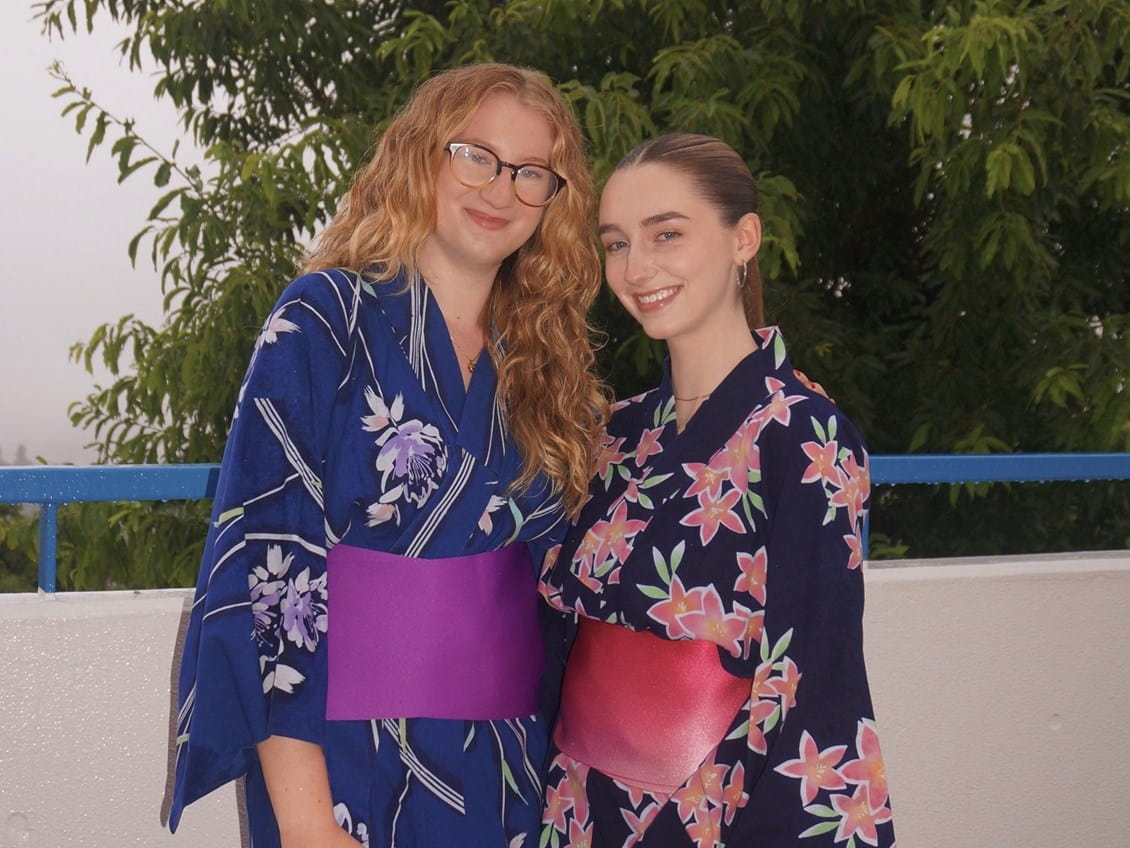
When people ask me how I got into traveling, they find it a little ironic that it all started in high school, given that I had never left the country before. But as a high school senior about to graduate, studying abroad was all I could ever think about.
Once I arrived at Endicott, I knew I could finally make this dream come true through their Global Gulls program. Fast forward to the fall semester of junior year, when I studied abroad in Madrid, Spain. It was truly one of the best experiences of my life, showing me what else the world has to offer and helping me understand different ways of life.
My time in Spain ignited a strong passion for traveling, and once I returned to the U.S., I made a promise to myself that I would take any opportunity to travel the world.
That promise is how I found the Showa Summer International Program (SSIP) at Showa Women’s University in Tokyo, Japan.
One day, my roommate, Riley Quinn ’27, and I stumbled across an Instagram post from Endicott’s Global Education Office promoting the two-and-a-half-week summer study tour. On a whim, we both applied, and the next thing we knew, we were on a 13-hour flight to Tokyo.
SSIP is a global program with students from all over the world, including places like India, South Korea, France, London, Indonesia, and more. The international aspect of the program quickly became one of my favorite parts, as I got to meet so many people I would never have crossed paths with.
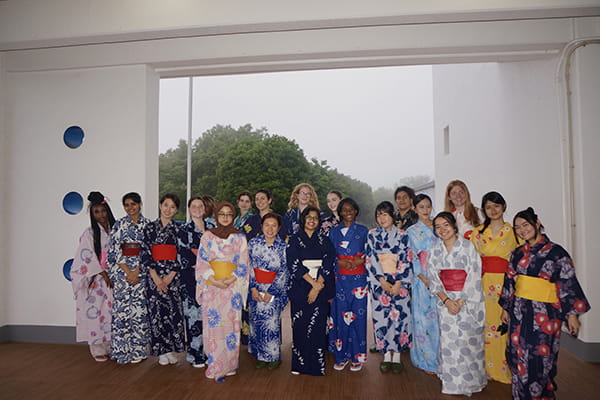
On the first day of SSIP, we took a campus tour, where we got to see the campus koi fish pond, the dining hall, and where our Japanese Culture & History class was held. This is also when we got to meet the other program participants, the Showa interns, and Showa faculty.
Our Japanese culture and history course was worth three credits and consisted of nine different lectures on various aspects of Japanese culture and history, including the Second Sino-Japanese War, Japanese tourism, anime, the art of Kabuki, and more.
In addition to the nine lectures, the program included several excursions planned by the Showa interns, so we could all become immersed in Japanese culture firsthand. Some of the excursions included exploring Harajuku, attending a chopstick-making class, and attending a live Kabuki performance.
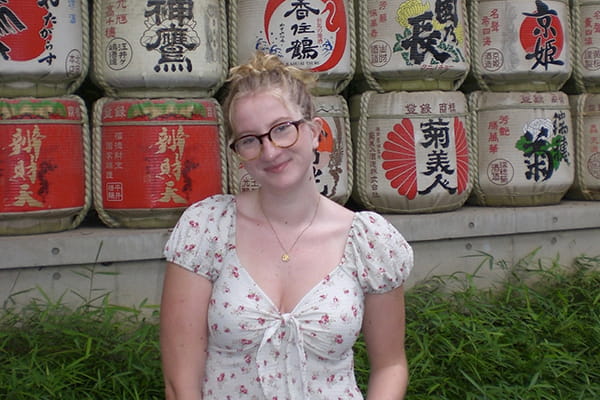
Out of all the excursions, my personal favorite was when we got to explore Harajuku and visit the Meiji Jingu Shrine. That shrine was the first I’d ever seen, and it was such a cool experience to learn about the history and its cultural significance to Japan.
In addition, the program excursions were an amazing opportunity for me to connect with others and learn more about where everyone was from.
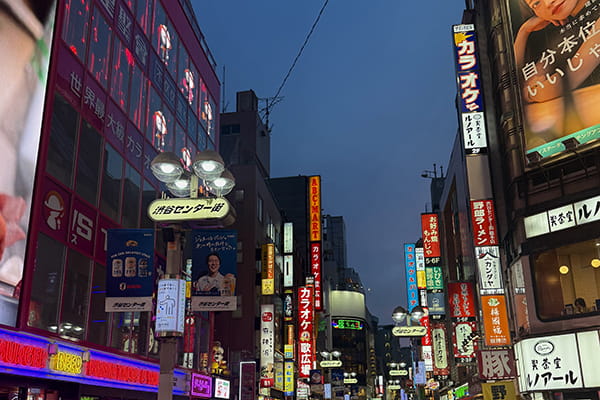
The conversations about our cultural differences were eye-opening. I loved seeing how the differences in our home countries brought us closer together, and it showed me how important it is to embrace them.
While I formed close bonds with the other program participants, there was also an aspect to the program where we would work with Japanese students from Showa Women’s University in cross-cultural workshops.
The Showa students were amazing at recommending places to travel and activities to do in Japan. This inspired my day trip to Kyoto, where I got to see the 1,000 red gates at the Fushimi Inari Taisha shrine and walk through the Arashiyama Bamboo Forest.
Our final assignment of the program was to work on a group project with global students and Showa students to create a presentation on one aspect of Japanese culture. My group chose Noren, which are cloths hung at restaurants to signify they are open or to state their name in Kanji, which are Chinese logograms used in Japanese writing.
From my time in Japan, I not only learned so much about myself and what I am capable of, but also that I would love to work in a field that allows me to grow and build connections globally. The study abroad program at Endicott makes it so easy for students to travel and gain these experiences. Whether it’s studying abroad for a semester or going on a study tour, Endicott’s Global Education Office caters to student needs, makes recommendations, and ensures resources are easily available.
After returning from Tokyo, I was fortunate to serve as an Endicott Global Ambassador. In this role, I assisted with the international student orientation program.
My experience in Japan also made me realize how important it is to have access to programs like this, and this realization has inspired my senior thesis, which focuses on accessibility for international students to study abroad in the United States.
This program was a great opportunity to connect with international students, but it also opened my eyes to international student accessibility. When I talked about my travels with these students, many of them mentioned how they wished they could travel more, but it was difficult due to their passport strength.
In further conversations, I learned that these international students faced significant challenges to get to Endicott due to visa challenges and immigration policy. As I heard more stories like this, it made me realize that the process for international students to study abroad in the U.S. is becoming more challenging.
This insight is inspiring my research into how universities can work with federal agencies to make the immigration process easier for international students, as it is important for students to gain global experience and have access to these opportunities.