

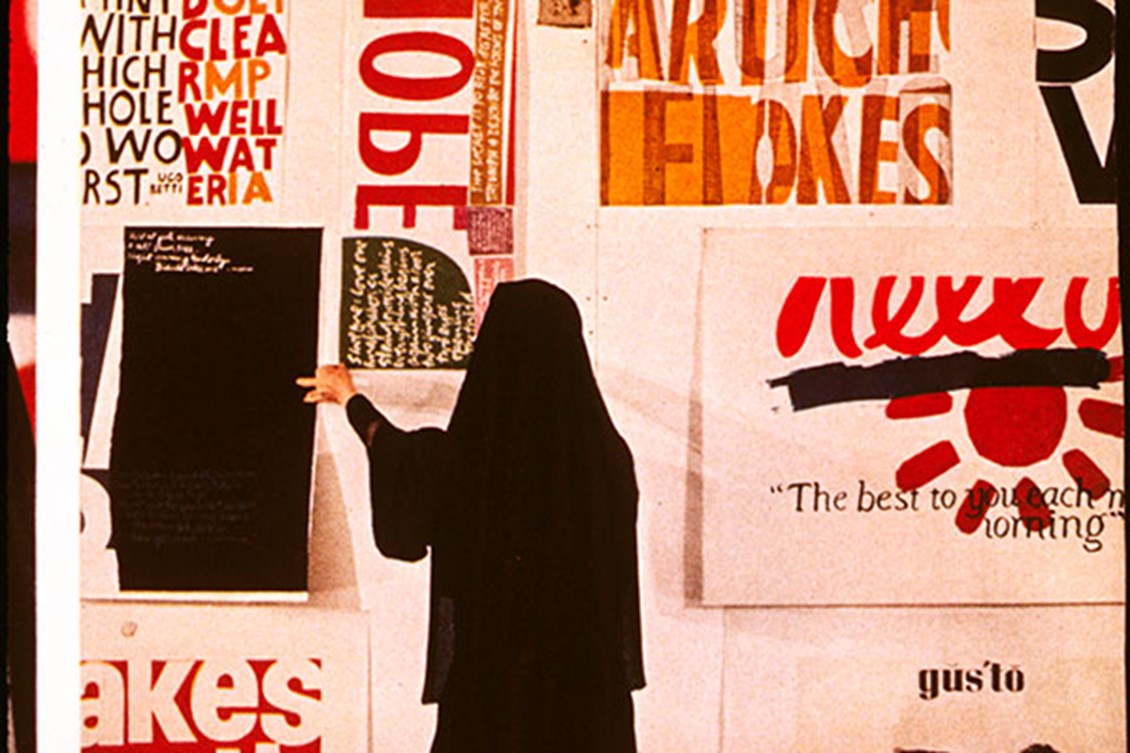
She was known as the “Pop Art Nun.”
And with her vibrant colors, borrowed headlines, and words about war, racism, faith, and hope, she teaches viewers that looking and seeing are not the same thing.
More than 50 years after artist, educator, and social justice advocate Corita Kent created her “a set of heroes and sheroes” series, its questions about justice, responsibility, and the possibility of change still resonate.
Now on view at Endicott College’s Walter J. Manninen Center for the Arts, “heroes & sheroes” brings together Kent’s works from 1968 to 1969, a period of extraordinary political and social upheaval and a pivotal moment in the artist’s own life.
The touring exhibition is on view now in the Heftler Gallery through November 20 and is free and open to the public.
Known for her bold, colorful silkscreen prints, Kent (1918–1986) drew from the visual language of popular culture to explore faith, love, justice, and our responsibilities to one another. Her artwork on display combines images pulled from newspapers and magazines with poetry, song lyrics, religious writings, political commentary, and Kent’s own words.
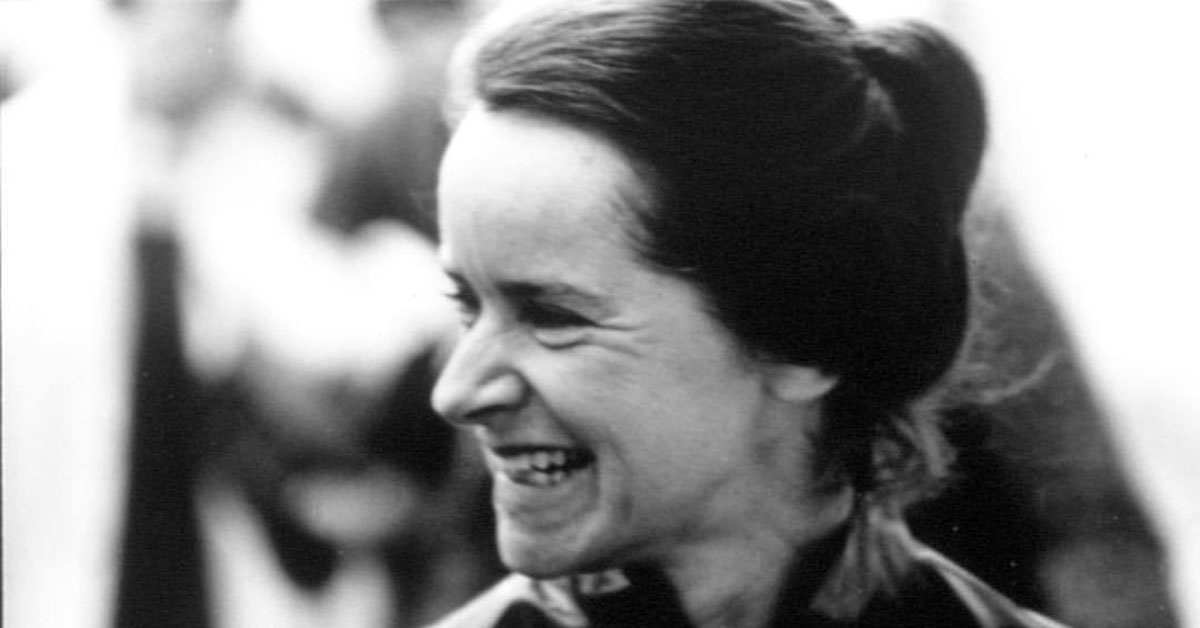
Together, the artworks reflect the defining issues of the decade, including the civil rights and anti-war movements and a series of devastating political assassinations, as well as Kent’s interest in how those events were presented and understood through mass media.
In “the cry that will be heard,” Kent captures the era’s urgency with a call to “give a damn about your fellow man.” In “american sampler,” she turns the visual language of American patriotism on itself.
Using red, white, and blue, Kent stacks words including AMERICAN, ASSASSINATION, VIOLENCE, and VIETNAM in lines reminiscent of the stripes of the American flag. Shifts in color reveal other words and ideas hidden within them, including SIN, I, and NATION, before the work ends with a pointed question and answer: “WHY” and “WHY NOT.”
Artist Ben Shahn famously described her as a “joyous revolutionary,” and “heroes & sheroes” also reflects her persistent belief in hope, collective action, and the possibility of change.That spirit emerges in “a passion for the possible,” which pairs an image of a crowd raising peace signs with the words of activist and clergyman William Sloane Coffin. The work captures an idea that runs throughout the series: Hope is not passive optimism, but a reason to imagine and work toward a different future.
About Corita Kent: Artist, Educator, Social Justice Advocate
Kent entered the religious order of the Immaculate Heart of Mary in Los Angeles at age 18 and later studied and taught at Immaculate Heart College. As an artist, mentor, and educator, she helped transform the small college into a center for artistic experimentation, community, and social engagement.Her national profile grew alongside her art. The Los Angeles Times named her one of its Women of the Year in 1966, and in December 1967, she appeared on the cover of Newsweek for a story examining the changing role of women in religious life.
In 1968, Kent took a sabbatical in Cape Cod, where she ultimately sought dispensation from her vows. Shortly thereafter, she moved to Boston, where she continued her practice as a secular artist. That same year, she began creating “a set of heroes and sheroes,” a series that reflected figures, movements, and ideas shaping contemporary American life.
In Boston, she continued to use her artwork in service to causes she cared deeply about, creating artworks and commissions connected to humanitarian, social justice, and civic efforts. Her presence in Boston also became part of the city’s visual landscape.
In 1971, she created the monumental “rainbow swash” for Boston Gas storage tank alongside Interstate 93, transforming a piece of industrial infrastructure into one of Boston’s most recognizable works of public art. She continued creating artwork, public commissions, and work in support of social causes until her death in 1998.
Over the course of her life, Kent created nearly 800 serigraph editions, along with thousands of watercolors and numerous public and private commissions. Today, the Corita Art Center holds the largest collection of her artwork and archival materials and works to preserve her legacy and enduring messages of hope, love, and justice for generations to come.
“heroes & sheroes” is on view in the Heftler Gallery at the Walter J. Manninen Center for the Arts at Endicott College from August 24 through November 20, 2026. Admission is free and open to the public. For directions or where to park on campus, visit Endicott's interactive map.