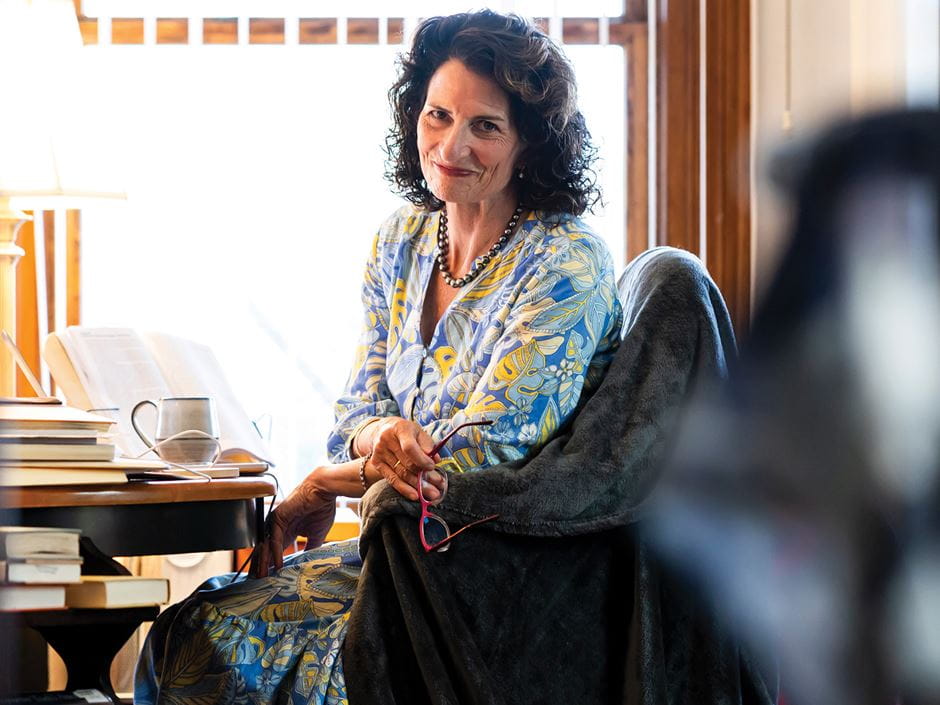
Charlotte Gordon, Distinguished Professor of Humanities, has made a name for herself writing the untold stories of extraordinary women. Her 2015 book, Romantic Outlaws: The Extraordinary Lives of Mary Wollstonecraft and Mary Shelley was awarded the National Book Critics Circle award. Now, Gordon is gearing up to finish her latest book.
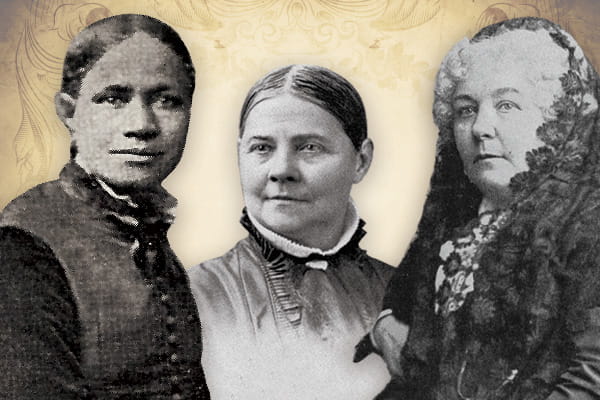
“I Speak of Wrongs”: Feuds, Friendships, and the Origins of the Women’s Movement (Crown, 2026) tells the story of the rise and near fall of the 19th-century women’s movement seen through the eyes of three women: Elizabeth Cady Stanton, Lucy Stone, and Frances Ellen Watkins Harper.
Intended for a general audience, the fast-moving narrative exposes the racism at the heart of America’s women’s suffragist movement and introduces readers to Harper, a remarkable but all-too-often unknown figure.
Soundings spoke with Gordon over the phone mid-pilgrimage to New York, where she followed in Cady Stanton’s historic footsteps and concluded her final research.
Why did you write this book?
These women are willing to brave criticism, death threats, and poverty to do what they think is right. Most people don’t know about two out of three of my heroines—and they might not know much about Elizabeth Cady Stanton. I had to write this book for all of us.
Can you introduce us to your favorite of the three main protagonists?
The star of the book is a single, Black, abolitionist woman named Frances Ellen Watkins Harper (1825-1911), who no one has ever heard of. It’s crazy because she should be a household name like Abraham Lincoln. She was one of the most powerful speakers of her day, when women who were public speakers often received death threats or were pelted with eggs. She believed so much in the injustice of slavery that she didn’t care what people thought.
My “Justice in American Literature” students love her poetry. They’re moved by her. She writes this beautiful poem called “Bury Me in a Free Land,” about going to Canada as a Black woman born into freedom in Maryland, a state where others were enslaved around her.
What was it like to be a woman in the 1850s when Harper came of age?
As a married woman, you had almost no rights, and if you were a Black woman, you absolutely had none. As the suffragist Elizabeth Cady Stanton (1815-1902) said: “When you were married, you became civilly, legally, economically, and politically dead.”
In American history classes, Cady Stanton is the mother of women’s rights in this country. While all that may be true, you also uncovered her darker, flawed side. What do you make of the real Elizabeth?
Now I come to the villain of our story, whom I also love. We are all taught in school that Cady Stanton was the founder of the women’s movement, but that’s just the story that she told. She is also the one who almost blew the movement apart.
When Stanton hears that Congress is getting ready to pass the 15th Amendment, which was going to give Black men the right to vote but not women, she says, “You’re going to give Black men the vote before white, educated, civilized women? You’re going to give Sambo the vote!”
The other women in the American Equal Rights Association are horrified by Stanton’s racism, and a huge split occurs. Frances Harper and the third woman in my book, Lucy Stone (1818-1893), walk away and start another organization, The American Woman Suffrage Association, supporting the right for Black men to vote and for themselves to vote after that.
Reformers were divided between supporting these two organizations, and as a result, many historians argue that this split pushed women’s rights back by 50 years.
Where does your third heroine, Lucy Stone, come into the picture?
I expect my students to identify most with Lucy Stone. She was the first woman from Massachusetts to graduate from college. She saved until she was 27 to attend Oberlin College and would get up at three in the morning to work to pay her way and study. She taught in Black schools and was a dedicated Abolitionist. When she graduated, she took the very unusual route of becoming an Abolitionist speaker, and was said to have had a remarkably beautiful voice.
Stone did, in fact, have eggs thrown at her and became known as the most famous woman in America, which is why it’s astonishing that Cady Stanton presents her as just a minor character in her published history of the movement.
Should Elizabeth Cady Stanton be cancelled for her racism?
I don’t think we should “cancel” anyone. Cady Stanton is a brilliant, important, and, yes, racist figure. Her “Declaration of Sentiments” should still be read, just as we still read the “Declaration of Independence” by the slave owner Thomas Jefferson. If women had been included in the 15th Amendment, we might never have discovered how racist she was. But I still teach her. I have students read her “Declaration of Sentiments” as well as her horrifying Sambo remarks.
What do you hope your readers take away from I Speak of Wrongs?
These women’s grit means a lot to me. Like everyone else, I push myself to figure out what I stand for and what my life purpose is all about. My hope is that if I spend more time with them, I’ll get even braver about standing up and speaking out about the things that matter—even when my ideas are unpopular.